
Loading...
Cold floors, high cooling costs, and musty smells - we find the gaps in your basement and fix them with the right materials for Alabama's climate.
Basement insulation in Auburn controls heat transfer between your basement and living space, reduces moisture movement through foundation walls, and lowers the load on your HVAC system - most jobs are completed in one to two days with minimal disruption to your home.
If your first floor feels cold in winter or stuffy in summer, the basement is usually the first place to look. Auburn homes - especially those built before the 1990s - were rarely built with adequate basement insulation, and the gap shows up on your Alabama Power bill every month.
Basement insulation works best when combined with vapor barrier installation to manage Auburn's high humidity - both services address the moisture and energy issues that basements in this climate commonly face.
If your kitchen or living room floor feels noticeably cold on January mornings, heat is escaping through an uninsulated basement ceiling. This is one of the most common complaints from Auburn homeowners in older neighborhoods, and it points directly to the basement as the source.
Auburn's cooling season runs roughly eight months, and an uninsulated basement ceiling lets heat and humidity rise into your living space, forcing your AC to compensate constantly. If your monthly bills seem high for your home's size, the basement is one of the first places worth checking.
A persistent musty odor is often the first sign that moisture is accumulating where it should not be. Auburn's clay soils hold water against foundation walls, and that moisture can work its way into insulation and wall assemblies over time. The smell tends to get worse after heavy rain.
If you can see insulation between your floor joists and it is sagging, compressed, or shows dark streaks, it is no longer doing its job. Discoloration often indicates air is moving through the insulation rather than being blocked by it, which means air sealing work is also needed.
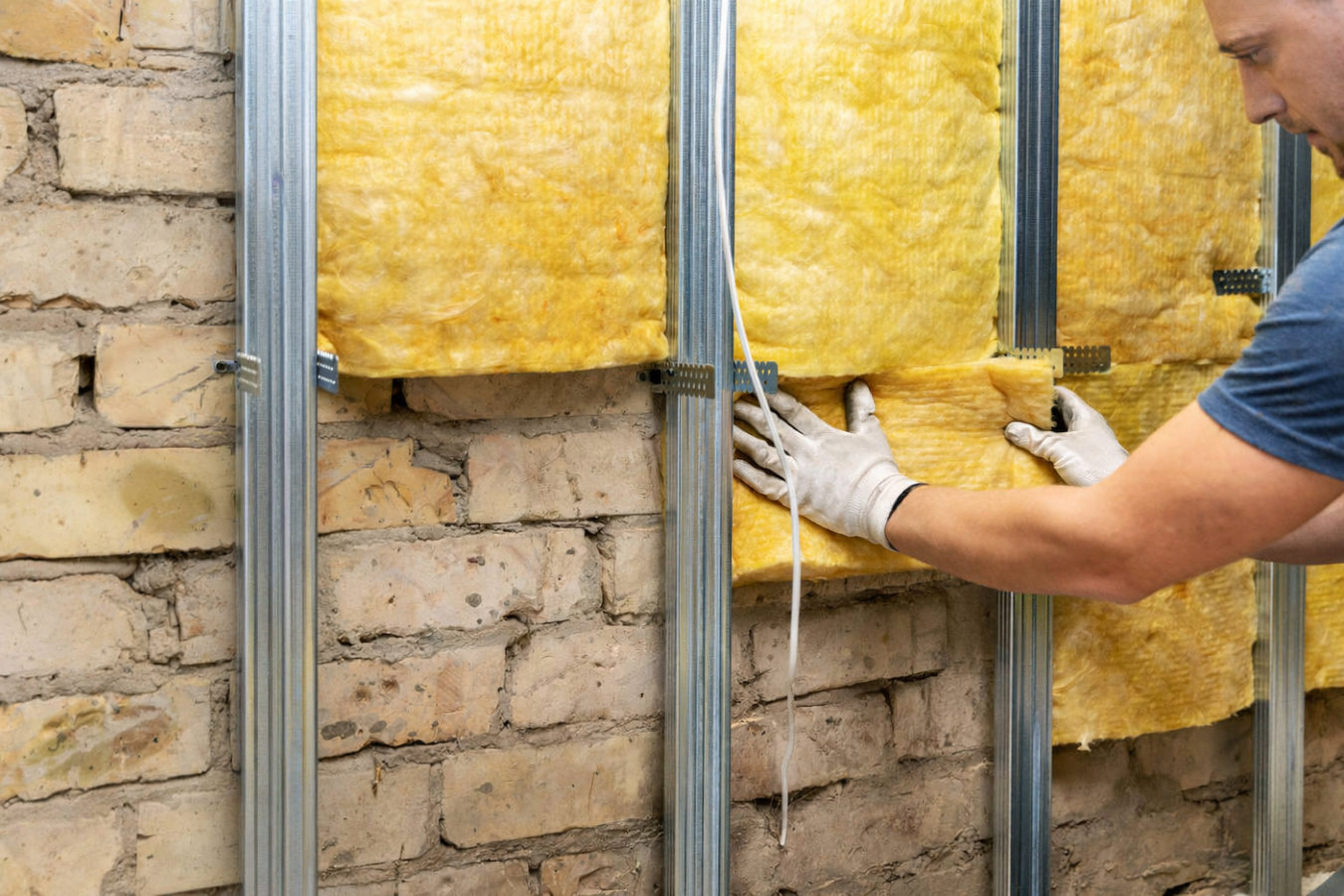
We handle both basement ceiling insulation - the floor separating your basement from your living space - and basement wall insulation. The right approach depends on whether your basement is finished or unfinished and whether it is connected to your home's heating and cooling system. For unfinished basements, we commonly install spray foam or rigid foam boards on the walls to manage both heat and moisture. We also pair this work with closed-cell foam insulation for areas that need maximum moisture resistance.
Before any insulation goes in, we assess the basement for moisture issues. Auburn's heavy annual rainfall and clay-heavy soils make water intrusion a real risk, not a remote one. If we find signs of seepage or dampness, we will tell you before we start - not after - because insulating over a moisture problem creates bigger problems down the road. When vapor barrier installation is needed first, we coordinate that work so your insulation is installed into a dry, properly prepared space.
Best for homes with unfinished basements that are not connected to the heating and cooling system - keeps first-floor rooms comfortable without conditioning the basement itself.
Suits homeowners looking to finish or partially condition their basement, creating a more comfortable and moisture-resistant space year-round.
Ideal for all home types - sealing the framing at the top of your foundation walls stops a significant source of air and moisture infiltration that most homeowners never think about.
Auburn receives about 56 inches of rain per year - nearly 20 inches more than the national average - and the area's heavy clay soils hold that water against foundation walls rather than draining it away quickly. That combination makes moisture assessment before any insulation job a non-negotiable step here. We see water intrusion and musty basement conditions regularly in neighborhoods throughout Auburn, particularly in homes built on lower-lying lots or in areas with older drainage infrastructure. Alabama's long cooling season means that a basement ceiling that leaks heat and humidity into your living space is adding to your electricity bill for eight months out of every year.
A significant share of Auburn's housing stock dates from the mid-20th century, including neighborhoods near Auburn University and established subdivisions throughout the city. Homes built before the 1990s were often constructed with little or no basement insulation, and whatever was installed has had decades to degrade or absorb moisture. We regularly work in homes across Opelika and Phenix City where baseline insulation conditions in older homes are similar to what we see in Auburn - and the same climate conditions apply throughout the region.
Call or fill out the contact form and we will respond within one business day. We ask a few basic questions about your home's age, whether the basement is finished, and any moisture concerns you have noticed.
We walk through your basement, check for moisture or air leaks, measure the space, and look at any existing insulation. You get a written estimate before we start - no surprises on the invoice.
On the day of work, we seal gaps around pipes, wires, and rim joists first - that step makes the biggest difference in performance. Then the insulation goes in, whether spray foam, rigid boards, or batts.
Once the work is done, we walk you through everything installed. You get documentation of the work, which is useful if you ever sell the home or need it for a permit inspection coordinated through the Auburn Building Department.
No pressure and no commitment. We give you a written quote so you know exactly what the work involves and what it costs before you decide.
(334) 780-0056Our crews have years of hands-on basement experience across the Auburn area. Ask for references and photos from recent local jobs before you commit - and we make it straightforward to pull the permits Auburn requires for qualifying work.
We built our basement insulation process around Auburn's clay soil and high rainfall - we assess moisture before any material goes in. Insulating over a wet basement is one of the most common contractor mistakes we see, and it is one we never make.
Auburn homeowners should not have to chase a contractor for a quote. We respond to every request within one business day, show up on time for the estimate, and give you a written quote the same visit. That is the baseline you deserve, and it is what we deliver.
The City of Auburn Building Department requires permits for certain insulation projects. We know which projects need them, handle the application, and coordinate the inspection. You get a documented record that the work was reviewed independently - not just by us.
Every one of these points comes down to the same thing: we do the work the right way, we explain what we find, and we give you documentation when we are done. Auburn homeowners deserve a contractor who treats their home and their time with respect - that is the standard we hold ourselves to on every job.
For more background on insulation and energy savings, the U.S. Department of Energy's basement insulation guide is a helpful reference. Auburn's local permitting requirements are managed by the City of Auburn Building Department.
The densest, most moisture-resistant spray foam option - often the right material for basement walls and crawl spaces in Auburn's humid climate.
Learn moreAddresses the moisture source before insulation goes in - essential in Auburn homes with a history of dampness or seepage.
Learn moreAuburn's long cooling season starts early - schedule your free estimate now so your home is ready before the heat and humidity arrive.