Loading...
Your attic is likely leaking cooled air out of your home every day. Sealing those gaps stops your AC from running nonstop, cuts your summer electric bill, and keeps Auburn's humidity where it belongs - outside.
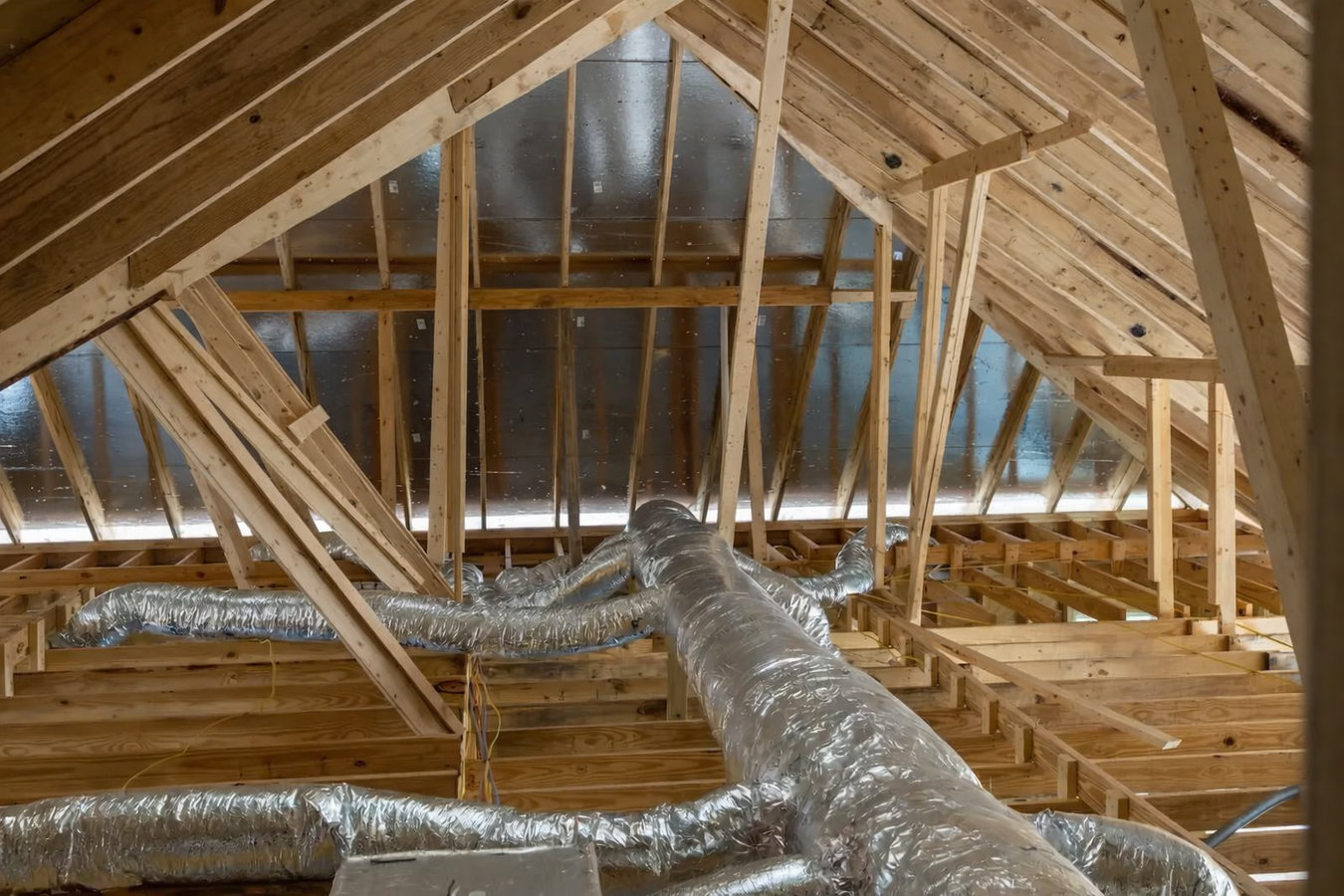
Attic air sealing in Auburn means a crew member goes into your attic and uses spray foam and caulk to plug every gap, crack, and penetration in the attic floor - around light fixtures, plumbing pipes, wiring runs, and wall tops. Most jobs take two to six hours. The result is a home that holds a comfortable temperature longer, an AC that cycles less, and measurably lower electric bills through Auburn's long cooling season.
This is a separate service from adding insulation, though the two are often done together. If you already have insulation in your attic but still struggle with rooms that will not cool down, air leakage is the likely reason - and adding more insulation without sealing the leaks underneath it will not fully solve the problem. Many homeowners pair this service with crawl space vapor barrier installation to address moisture from both above and below the living space.
The work happens entirely in your attic - your living space stays undisturbed. You do not need to leave the house, and there is no re-entry wait after the job is finished. A contractor who takes this work seriously will measure your home's air leakage before and after with a blower door test, so you have a concrete number showing the improvement.
If your second floor or rooms near the ceiling feel noticeably warmer than the rest of the house during Auburn's long summer, conditioned air is escaping through the attic floor. Your AC is cooling air that immediately leaks out, so the system runs constantly without ever catching up. This is one of the most common complaints Auburn homeowners describe before having air sealing done.
Auburn's cooling season is long, and if your electricity bills climb sharply in May and stay elevated through September, air leakage is a likely contributor. When your attic is poorly sealed, your AC has to work much harder than it should to maintain a comfortable temperature. If your bills seem high relative to your home's size, it is worth having an energy assessment done.
Gaps around recessed lights, ceiling fans, and HVAC registers are common air leak points. If you notice dust rings forming around ceiling fixtures, or a faint musty smell when the AC kicks on, outside air is being pulled through your attic and into your living space. In Auburn's humid summers, that air carries moisture and can introduce mold spores over time.
Homes built before the mid-1990s in Auburn were not required to meet modern air sealing standards, and most were never sealed at all. If you have owned your home for years and no one has ever addressed gaps and penetrations in the attic, you almost certainly have significant leakage. You do not need to wait for a visible symptom - the age of the home is reason enough to have it checked.
We seal the attic floor plane systematically - every plumbing pipe, electrical wire penetration, recessed light housing, wall top plate, and attic hatch. We use a combination of spray foam and acoustical sealant depending on the gap size and location. Before we start, we run a blower door test to measure your home's current air leakage rate. After we finish, we run it again. That before-and-after comparison is the objective proof the job worked. Homeowners who want a full thermal envelope upgrade can combine attic air sealing with air sealing services that address wall and floor penetrations throughout the home.
For homes with existing insulation that covers the attic floor, we will move it as needed to access the deck, seal the gaps, and replace the insulation afterward. We do not charge extra to do this correctly. If your attic insulation is in poor shape and should be replaced, we can discuss that as a separate decision - but we will never push unnecessary add-ons during the air sealing job itself.
Best for homes with consistent access to the attic floor - the most thorough approach to eliminating air leakage above the living space.
Ideal for homeowners who need a targeted fix on a pull-down stair or hatch that is visibly leaking warm air into the living space.
For homeowners who want measurable proof - includes before-and-after testing so you can see the improvement in a concrete number.
Auburn sits in a hot-humid climate zone where the cooling season stretches from April through October. That means your air conditioner runs hard for nearly half the year, and every gap in your attic floor is actively leaking cooled air during that entire stretch. Homeowners here tend to see faster payback on air sealing than those in milder climates precisely because the system that benefits most - the AC - runs so much more. The U.S. Department of Energy estimates that air leaks account for 25 to 40 percent of the energy used for heating and cooling in a typical home. In Auburn, that translates to real money every month from May through September.
A substantial portion of Auburn's homes were built before the mid-1990s, when Alabama's building codes did not require air sealing as part of new construction. Neighborhoods across Auburn, AL and Phenix City, AL are full of homes from that era where the attic floor has never been touched. Auburn's year-round humidity adds another layer of urgency - warm, humid outdoor air pulled through unsealed attic gaps can quietly cause mold and wood damage that you will not notice until it becomes expensive to fix.
We ask about your home's age, any symptoms you have noticed, and whether you have had any previous attic work done. You do not need to know the technical details - just describe what you are experiencing. We reply within 1 business day.
We visit your home, access the attic, and run a blower door test to measure your current air leakage rate. This gives us a real number to work from and gives you a baseline to compare against after the job is done.
After the assessment you receive a written quote explaining what will be sealed, how, and what it costs. Take time to compare quotes if you want. A trustworthy contractor will not pressure you to sign on the spot.
The crew works through your attic systematically - two to six hours for most homes. You can be home the entire time. After they finish, we run a second blower door test and show you the before-and-after numbers.
Free estimate. Blower door measurement included. We reply within 1 business day.
(334) 780-0056We measure your home's air leakage rate before we start and again when we finish. That before-and-after number is the only objective proof that the job was done well - and we show it to you in writing before we leave. Not every contractor offers this. We think it should be standard.
We are an experienced crew that works exclusively in the Auburn metro and surrounding communities. We know the housing stock - the 1970s brick ranches near campus, the 1990s subdivisions on the city's edges - and we know what each type of home typically needs.
Auburn's average annual humidity regularly exceeds 70 percent, and warm, moist outdoor air pulled through unsealed attic gaps can damage wood framing over time. We look at moisture pathways - not just energy loss - and flag any concerns we find during the assessment before any work begins.
Every job starts with a written estimate that details what will be sealed, the materials being used, and the total cost. No surprises on invoice day. If permits are required for your project, we handle that process - you should not have to navigate building department paperwork on your own.
Quality attic air sealing is essentially permanent - the foam and caulk used do not degrade under normal conditions, and there is nothing to maintain or replace. You seal it once and it keeps working for the life of the home. For more background on what good air sealing looks like and how it is measured, the Building Performance Institute sets the national standards for home energy professionals, and the U.S. Department of Energy air sealing guide explains the process in plain language.
The federal government currently offers a tax credit covering up to 30% of the cost of qualifying air sealing work. See the IRS Energy Efficient Home Improvement Credit page for current rules and documentation requirements.
Address moisture coming from below the living space while you seal the leaks from above - a complete approach to Auburn's humidity problem.
Learn moreExtend air sealing beyond the attic to walls, floors, and other penetrations throughout your home for a fully tight building envelope.
Learn moreCall us or submit a request today and we will have a written estimate in your hands within 1 business day.